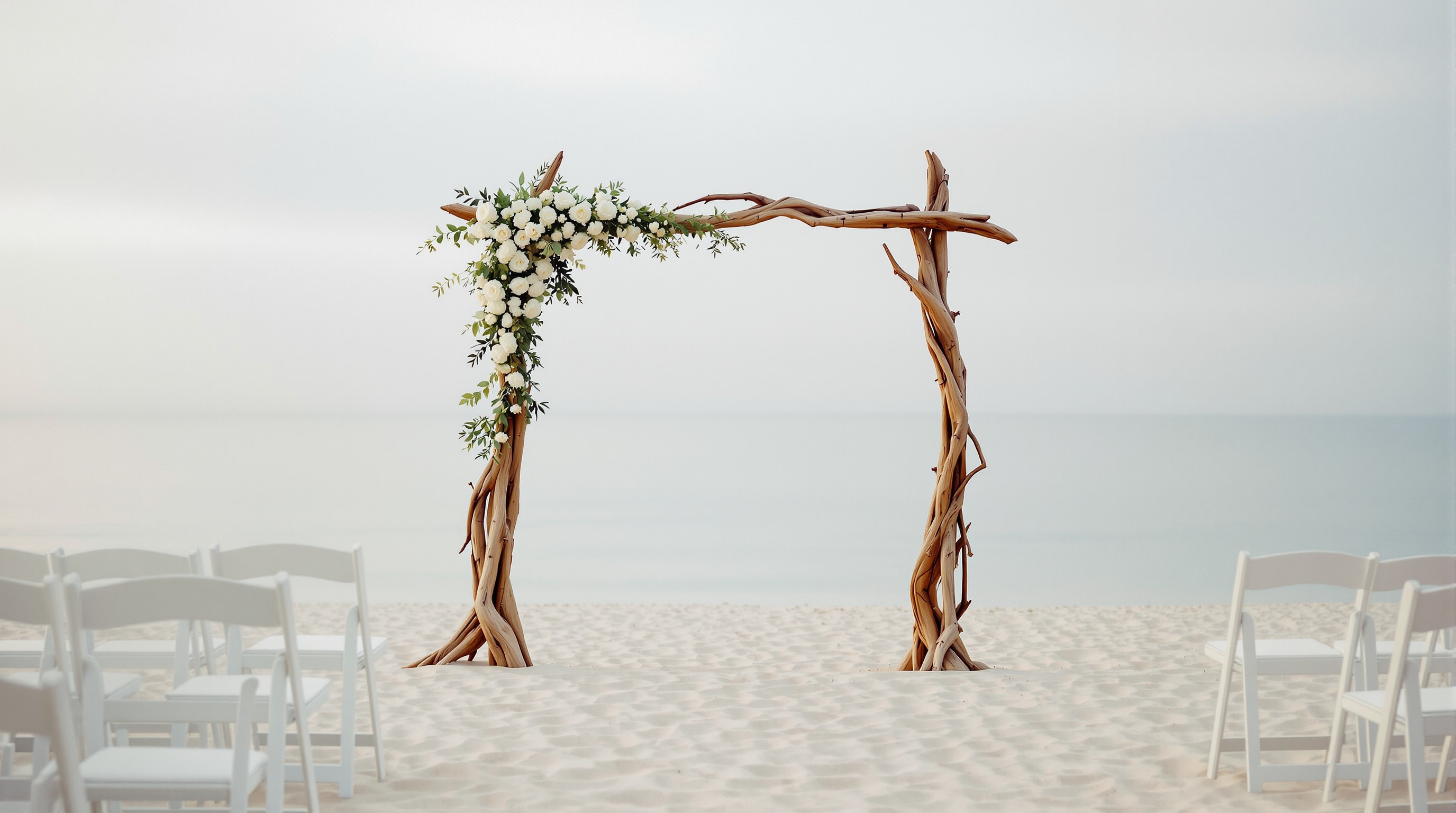
A simple, flexible order of ceremony
Most beach ceremonies follow a familiar arc, trimmed to suit the relaxed setting:
- Processional: The wedding party and the couple make their way to the front. On sand, keep the aisle short and firm.
- Welcome: The officiant greets everyone and sets the tone.
- Readings: One or two short passages — poetry, prose, or a favorite lyric.
- Vows: The heart of the ceremony, in your own words or a cherished form.
- Ring exchange: Simple and sweet.
- Unity ritual (optional): A sand ceremony, handfasting, or similar symbolic act.
- Pronouncement and first kiss: The moment everyone is waiting for.
- Recessional: Walk back up the aisle together — ideally straight toward the water for photos.
Beach ceremonies are usually shorter than indoor ones — fifteen to thirty minutes is common — which suits guests standing in sun and sand.
The sand ceremony
The sand ceremony is the coast's signature unity ritual, and for good reason. Each partner pours a different color of sand into a single shared vessel, the grains blending into a layered pattern that cannot be separated again — a quiet, beautiful symbol of two lives joining. Families sometimes add their own layers to represent a blended household. Because the result is a keepsake you take home, many couples love it more than a unity candle, which the beach breeze would blow out anyway. Other lovely options include handfasting (binding the couple's hands with cloth or cord) or a simple shell exchange.
Writing vows for the open air
The shoreline invites sincerity. Whether you write your own vows or adapt a traditional form, keep them heartfelt and reasonably brief — wind and waves make long passages hard to hear, and short, vivid promises land beautifully. If you write your own, read them aloud outdoors beforehand; words that feel right on paper sometimes need trimming to carry across open space. For structure and inspiration, resources like The Knot's guide to writing vows are a helpful starting point.
Making yourself heard
The single most common regret at beach weddings is that guests could not hear the vows. Open air has no walls to reflect sound, and surf, wind, and gulls all compete with your officiant. The fix is simple: use a small PA system or a battery-powered amplifier with a clip-on or handheld microphone, and position speakers to face the guests rather than the sea. Even for an intimate group, a modest setup transforms the experience. Seat guests with their backs to the wind and sun where you can, so the breeze carries your words toward them, not away.
Choosing and briefing your officiant
Your officiant sets the tone and keeps the ceremony moving. Whether it is a professional celebrant, a religious leader, or a friend ordained for the day, make sure they are comfortable speaking outdoors and understand the setting's quirks — the amplification, the shorter run time, the possibility of wind. Confirm well in advance what your location and jurisdiction require to make the marriage legal, since rules vary by place. A quick rehearsal, even an informal one, irons out the processional on sand and everyone's cues.
Decor that respects the wind
The ocean is already your backdrop, so decor can be minimal. A single arch or arbor frames the couple and gives photographs a focal point; anchor it firmly, because a tall, fabric-draped structure acts like a sail. Skip anything that blows away or topples — tall unweighted centerpieces, loose petals, delicate paper. Weighted lanterns, potted greenery, and sturdy florals hold up far better. Let the sea do the decorating, and keep your own touches simple, secured, and few. With the ceremony planned, turn to the permits and logistics that keep it running on time.