Permits and permissions
Most public beaches require a permit to hold a wedding, even a tiny one, and the rules vary widely from one town or park to the next. Some are a simple online form and a modest fee; others cap guest counts, restrict chairs or arches, forbid amplified sound, or limit alcohol. Start early, because popular beaches book their date-and-time slots months ahead. The authoritative source is almost always the local parks and recreation department, county office, or — for protected shorelines — the managing state or national park authority (for example, the National Park Service for national seashores). Ask specifically about guest limits, structures, sound, alcohol, vehicle access, and cleanup requirements, and get the approval in writing.
Timing around the tide
The tide is the one “vendor” that never negotiates. High tide can shrink your ceremony space dramatically or erase the exact spot you scouted at low tide that morning. Before you set a ceremony time, check a tide table like NOAA Tides & Currents for your date and beach, and plan to gather when the water gives you the room and the backdrop you want. As a rule, aim for the hours around low or mid tide unless you specifically want the drama of water close by — and always leave a comfortable margin.
Have a real weather plan
Sun, wind, and sudden rain are all part of coastal life, so a vague “we'll hope for the best” is not a plan. Before the day, decide and document your backup: a nearby covered space, a tent on standby, or a flexible start time to dodge a passing shower. Assign one person to make the weather call by a set deadline so the decision does not fall to the couple in the moment. Watch the National Weather Service forecast in the final days, and if you are marrying in a storm-prone season, read the seasons and timing guidance before you lock a date.
Sound, power, and comfort
Open air swallows voices, so plan for amplification if guests are to hear your vows — confirming first that your permit allows it. Power is rarely available on a public beach, so battery-powered speakers and chargers are the norm. For guest comfort, think about shade and hydration at warmer times of day: a simple drinks station, a few umbrellas or a shaded welcome area, and paper fans go a long way. These small touches keep a ceremony pleasant rather than sweltering.
Setup, safety, and access
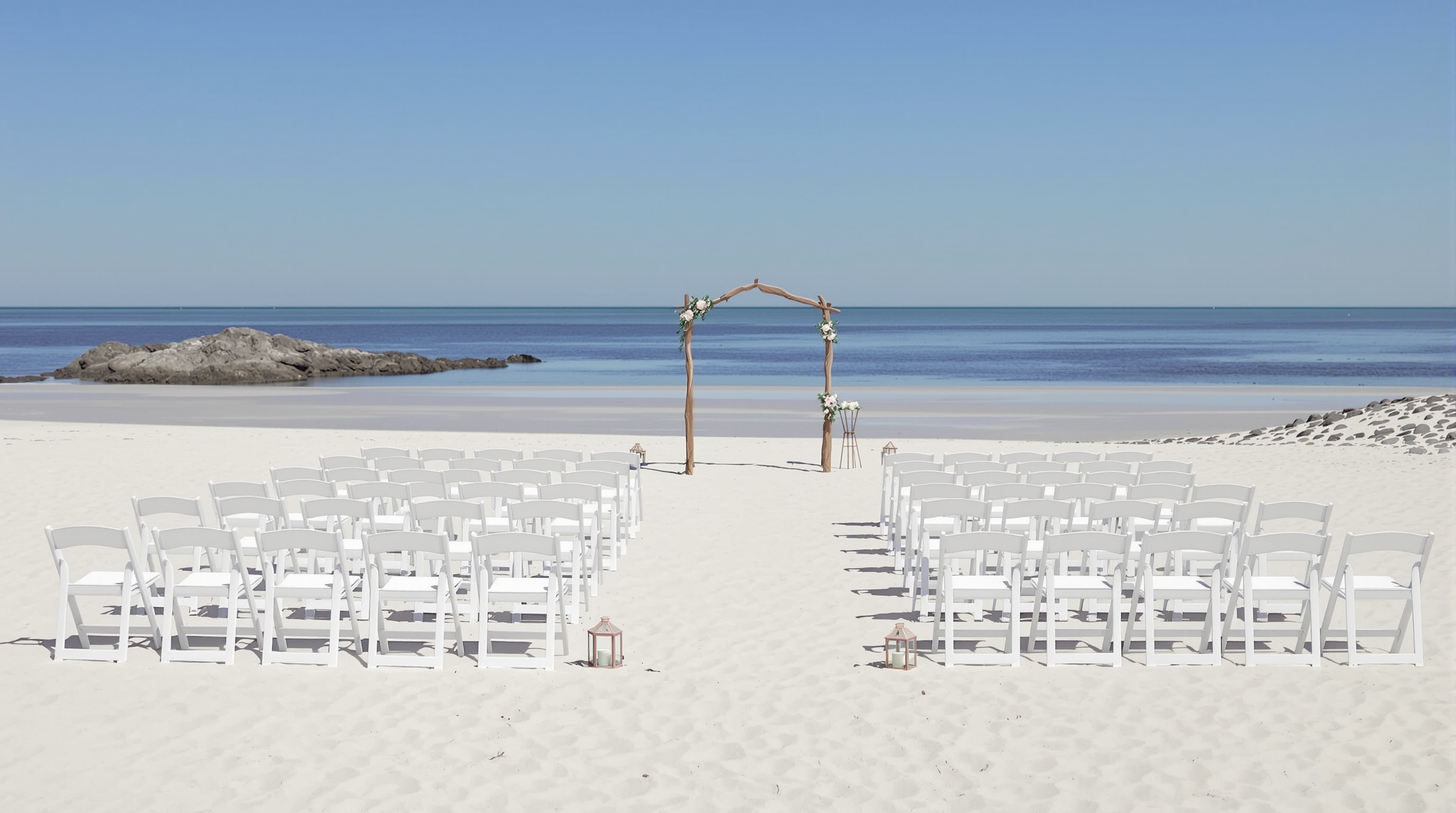
Getting chairs, an arch, and supplies across soft sand is real work — confirm how close vehicles can get and build in time and hands for the carry. Weight anything tall or fabric-covered against the wind. Keep a small first-aid kit on site, mind the sun for everyone, and think about a firm mat or aisle runner so guests — especially older ones — can walk safely to their seats. A short, well-marked route from parking to ceremony prevents both lateness and mishaps.
Leave the beach better than you found it
Beaches are fragile, shared, and often protected habitats, so cleanup is both courtesy and, frequently, a permit condition. Avoid anything that can blow away or harm wildlife — loose balloons, plastic confetti, and glitter are widely discouraged or banned. Choose biodegradable or reusable decor, brief your party to pack out everything, and consider eco-friendly toss alternatives like dried petals or bubbles. The principles of Leave No Trace apply beautifully to a shoreline celebration: take only photographs, leave only footprints. With logistics handled, everything else — from attire to the ceremony — gets easier.